"The REAL cost of adding AI to your business AI is on the minds of almost every business. Some people use it for customer support, while others apply it for content creation, internal tools, sales workflows, coding, research, or simple automation."
The REAL cost of adding AI to your business AI is on the minds of almost every business. Some people use it for customer support, while others apply it for content creation, internal tools, sales workflows, coding, research, or simple automation.
That makes sense. AI can save time, cut down on repetitive tasks, and help small teams accomplish more with fewer resources.
However, many overlook one important aspect early on: the actual cost of running it. This is not about the cost of testing a few prompts or trying out a demo. It refers to the real cost of using AI every day, with actual users, real requests, and business expectations.
AI feels cheap at first.
When you test an AI tool, the costs usually seem minimal.
You send a few prompts, receive some answers, and everything appears affordable. This is where many founders and business owners get too comfortable. The issue is that a live product behaves differently from a test. Real users ask longer questions, send follow-up messages, and repeat tasks. Sometimes the AI gives a weak response, requiring the system to try again.
Occasionally, a chatbot needs to search through documents to provide a proper answer. All these minor activities can quietly accumulate behind the scenes. A single AI response may look simple on the surface but involves instructions, earlier conversation history, product information, customer details, retrieved documents, and the final answer.
Thus, the cost does not solely depend on what the user sees but also on everything the system processes.
Chatbots, Agents, and AI tools are not the same
It's essential to understand that not every AI feature has the same running cost.
A simple chatbot might only answer one question at a time, making it easy to estimate. An AI agent is different. It may need to plan a task, search for information, use tools, check the results, retry if something fails, and prepare the final answer.
This means one user request can lead to multiple AI calls in the background. That’s why two businesses can both claim they are "using AI," yet their costs can differ significantly. A website chatbot that answers FAQs is not the same as an AI research assistant. A product description generator is different from a coding agent that reads files, writes code, and checks its work.
The more steps the AI must take, the more crucial it is to estimate the figures before launching.
The cost Is not only the AI model
Many people focus only on the model price. While that is a good starting point, it doesn’t present the full picture.
Depending on your project, you also need to consider:
- How many people will use the tool each month * How often each person will use it
- The average length of user messages
- The average length of AI responses
- Whether the tool needs to read documents
- Whether it uses a knowledge base or vector database
- Whether failed tasks require a retry
- Whether a human needs to review the output
- Whether you are using a cheap model, premium model, or both None of these factors are daunting on their own.
The problem arises when you ignore them until the product is live. That’s when costs become more difficult to control.
Why ROI matters more than just price
The key question shouldn't be, "Is AI expensive?"
A better question is, "Is this AI feature worth its cost?" For instance, an AI support chatbot that costs a few hundred dollars monthly could be a great investment if it saves the team many hours.
If it reduces support tickets, improves response times, and helps customers faster, the cost may be easy to justify. However, another AI feature may seem inexpensive but not worth it if nobody uses it or if it doesn’t save significant time. This highlights the importance of return on investment.
Before implementing AI, consider simple questions: How much time will this save? How many tasks will it complete? Will it reduce support work? Will it help us make more sales? Will customers actually use it?
Can we afford the cost if usage increases? These questions don’t require perfect answers at the start. Even rough estimates can lead to better decisions.
**SaaS founders need to be extra careful **
If you’re developing a SaaS product with AI features, cost planning is even more critical. A standard software product usually has predictable hosting costs.
However, an AI product can become pricier as users become more active. While that seems obvious, it can create issues if pricing isn't planned appropriately.
For example, you might charge a customer $10 a month, but if they use the AI feature heavily, it may cost you more than that in API usage. In such cases, growth can lead to quicker losses. This is why AI SaaS products often require usage limits, fair-use policies, plan-based restrictions, or additional charges for heavy users. It’s not about making the product less useful.
It’s about ensuring the business can sustain itself as more people use it.
A little planning goes a long way
The good news is that you don’t need to guess blindly. Before launching, you can estimate some basic figures. Consider how many users you expect, how many messages or tasks they will run, which AI model you want to use, and what the average response will look like.
You can also compare different scenarios. For example: What if usage doubles? What if users send longer messages? What if you switch to a cheaper model? What if only paid users access the AI feature? What if you limit the number of AI actions per plan?
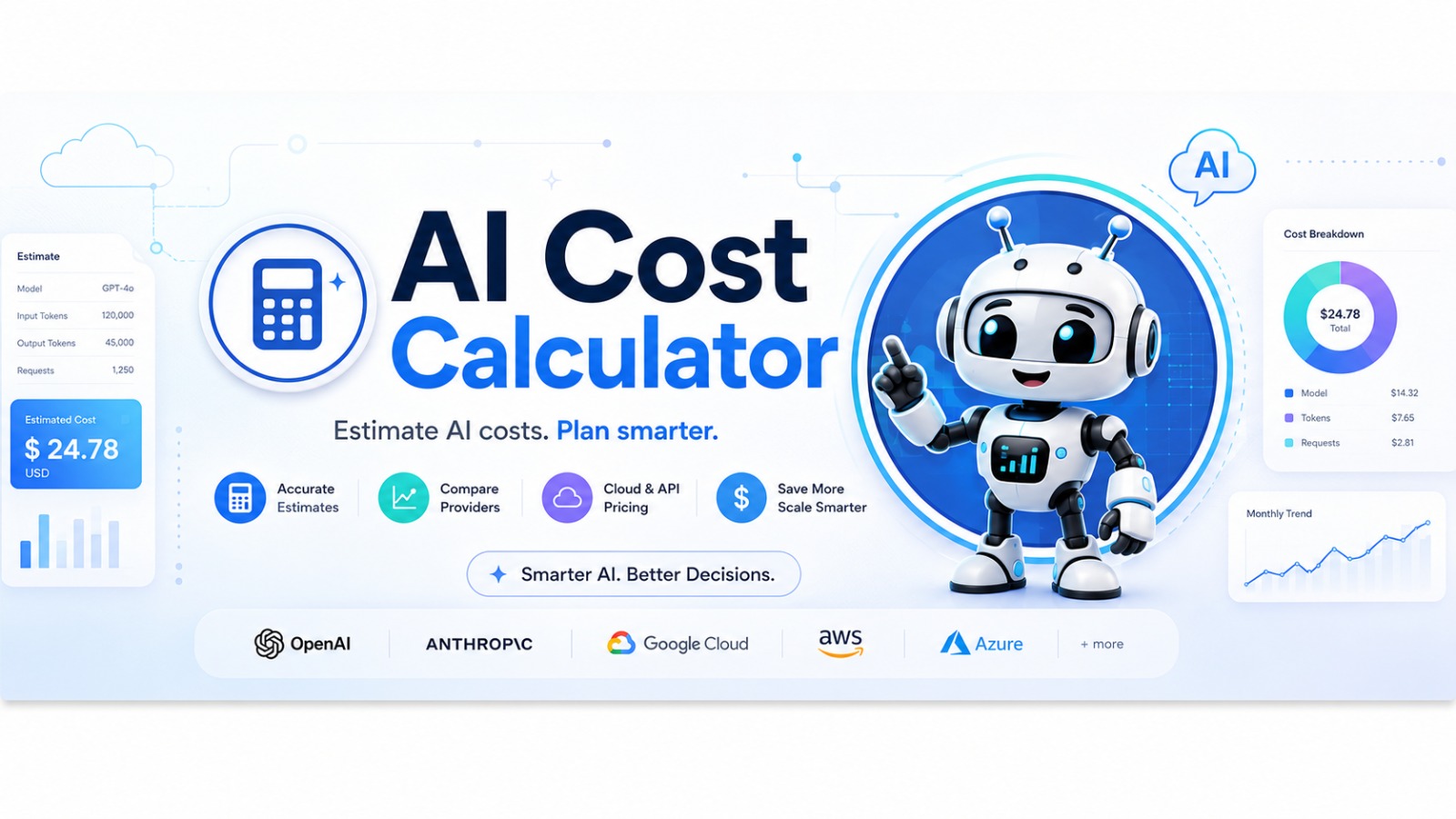
These simple checks can help avoid big surprises later. A useful approach is to use an AI cost and ROI calculator before you build or launch. It can provide a rough estimate of monthly costs, cost per user, and whether the feature is financially viable based on your assumptions.
You can try this AI cost and ROI calculator here: ai-costcalculator.com
**Final thoughts **
AI can be a valuable addition to a business, but it should be treated like any other business decision. The tool shouldn't just be impressive; it should also make financial sense. The businesses that gain the most value from AI usually don't rush into it without thought. They test, estimate, adjust, and build with a focus on the numbers. A small estimate today can prevent a lot of confusion later.